




In the Korean peninsula, the year 2013 is the 60th anniversary of the Korean War Armistice Agreements and the following US-Korea alliance. The Armistice treaty and US-Korea alliance share their root with the Korean War and therefore, in this context, it can be said that the US-Korea alliance and the Armistice Agreements are "historical twins". Despite the 3 years of sanguinary war which decimated millions of population, the Korean War has not officially ended. Consequently, the Korean War is often referred to as one of the longest wars in the modern world history.
|
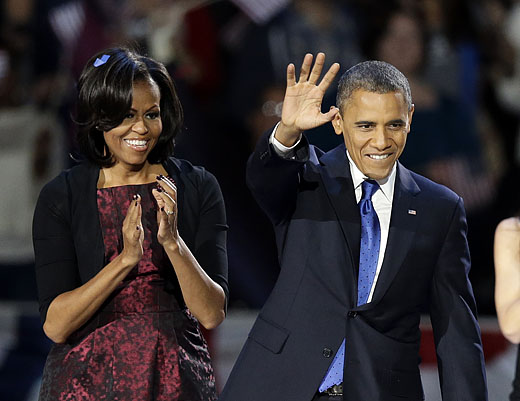
| ▲ President of the United States Barack Obama ⓒAP |
Initially, the United State, before the outbreak of the Korean War, did not recognize the strategic significance of the Korea peninsula and exclude South Korea from the "Acheson line". Yet, the United States later, regarding the Korean War as a prelude to the possible World War III, began to dispatch its troops and made South Korea as the outpost of Anti-communist line. This strategy of the United States, in combination with brinkmanship of Syngman Rhee, brought about the ROK-US Mutual Defense Agreement. Nowadays, South Korea is one of the most important allies of the United States.
Replacing the armistice regime with peace regime is complicatedly interrelated with the ROK-US alliance. Not only is the alliance based on the concept of "common enemy", but also the main purpose of the ROK-US alliance is to maintain stability of the Korean peninsula by checking the threat of the North. Consequently, building peace regime in the Korean peninsula can undermine the fundamentals the ROK-US alliance.
Such complex situation is the main culprit of strategic distrust between the US-ROK alliance and the Sino-DPRK alliance. Both Seoul and Washington are still skeptical over the Pyongyang's veracity concerning peace regime building. They believe that North Korea's claim of peace regime is actually aiming at termination of the ROK-US alliance and the withdrawal of the US troops from the Korean peninsula. On the other hand, for Pyongyang and Beijing, Seoul and Washington are reluctant to discuss the peace regime issue since they attempt to reinforce the ROK-US alliance on the excuse of the North threat.
Such strategic distrust of the both sides has been postponing the end of the Cold War on the Korean Peninsula and exacerbating concerns over the possible New Cold War in East Asian region. Moreover, it is the very reason why the Peace Forum among South Korea, North Korea, the United States, and China, which has been agreed during the six-party talks, is urgently needed.
It is commonly said that the US Presidents tend to care about the re-election during their first term while focusing on the achievements during the second term. Consequently, there are many discussions and suggestions about goals that should be achieved during President Obama's second term. Yet, unfortunately, among them, it is hard to listens to the voice insisting that the ceasefire regime on the Korean peninsula must be replaced by the peace regime. Not many people are concerned about finishing the longest war in the history of the United States.
In spite of such indifference, building peace regime on the Korean peninsula can have significant implication. Although "the end of the Cold War" discourse has been in fashion in the West, the Cold War has not been ended in the Korean peninsula. In this regard, "the end of the Cold War" discourse can also be deemed as another form of Orientalism. Building peace regime is the most influential way to end the Cold War on the Korean peninsula and to ease the emerging New Cold War tension in East Asia. In addition, it can also contribute to the world peace by precluding the Second Korean War in which, if broke out, the United States and China should be involved in any way.
Furthermore, the peace regime can also break the deadlock over the nuclear issue, making a significant contribution to denuclearization of the Korean peninsula if the denuclearization is set as a priority goal of the regime. To be specific, it is also plausible that the peace regime stipulates the subject of nuclear decommissioning, the methods, and the deadline.
It is the first time that President of the United States and South Korea inaugurate in the same year since 1993 when Bill Clinton and Kim Young-Sam took office. 1993 was also the year that the nuclear crisis on the Korean peninsula intensified as North Korea withdrew herself from the NPT. 20 years later from 1993, President Obama and Park Geun-Hye should get to the bottom of the problem of the North's nuclear weapons. It can be made possible only by replacement of the armistice regime with the peace regime.
| This article was published in Peace Network on January 23, 2013 |




전체댓글 0